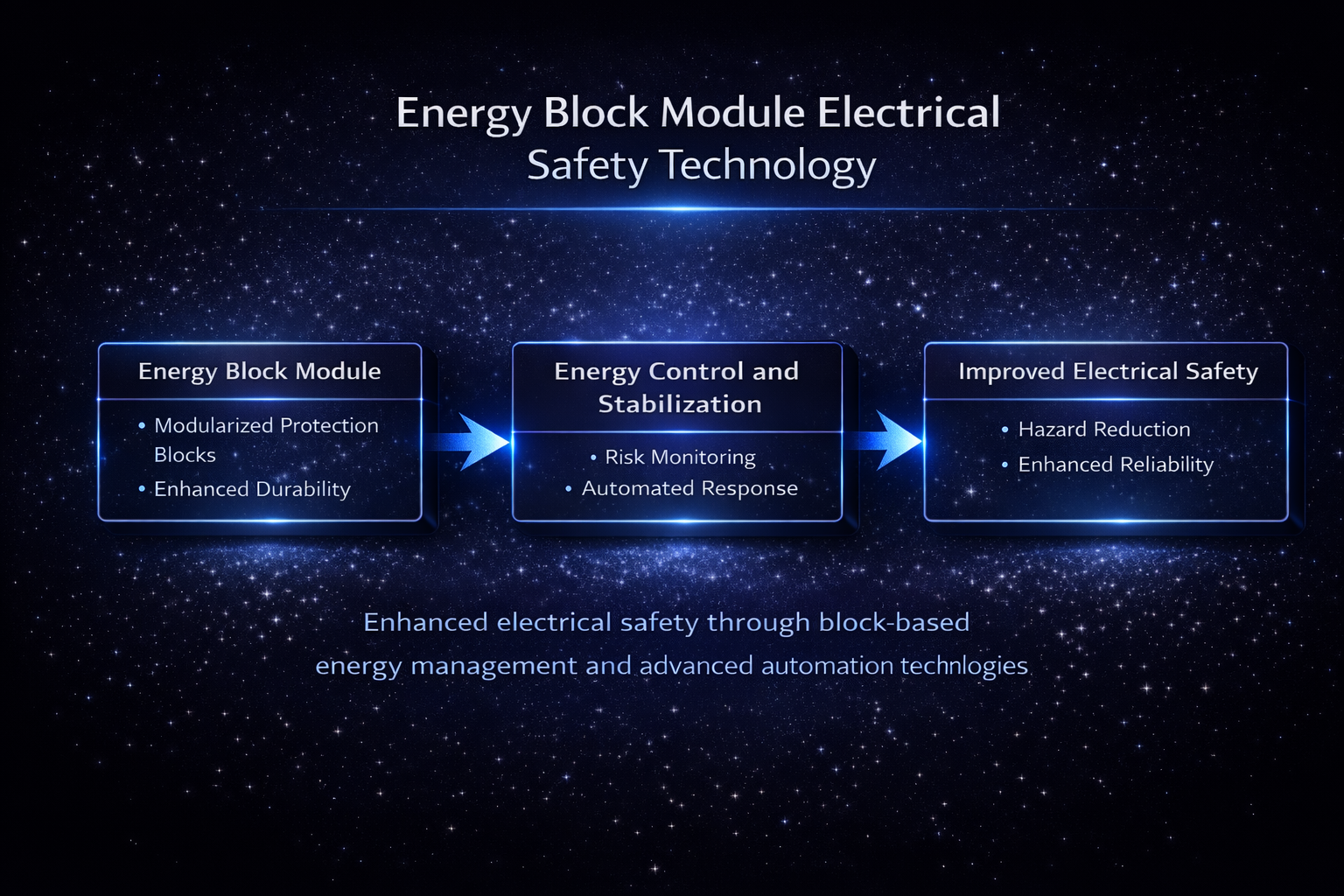
Rather than forcibly interrupting current flow or frequently triggering protective devices,
this technology aims to fundamentally reduce accident probability by stabilizing the
structural conditions under which hazardous currents are formed and propagated within
the power system.
A
Conventional Electrical Safety Approaches
Post-incident protection
- Reliance on residual current devices (RCDs, ELCBs)
- Disconnection after overcurrent or overheating is detected
- Protection actions mainly activated after an abnormal event occurs
B
Energy Block–Based Safety Concept
Pre-incident structural prevention
- Structural organization of current components before fault conditions develop
- Mitigation of abnormal current paths toward neutral, ground, and enclosures
- Suppression of hazardous energy accumulation even without breaker operation
✓
Core Technical Concepts
Foundational principles
- Structural separation of abnormal current components such as leakage, imbalance, and high-frequency elements
- Stabilization of hazardous current paths by reducing unnecessary inflow to grounding, enclosures, and neutral conductors
- Safety 확보 through suppression of energy concentration that may lead to electric shock or fire
- Passive and non-intrusive application without modification of existing electrical installations
◎
Interpretation of Safety Effects
Electrical safety perspective
- Reduced probability of electric shock incidents
- Mitigation of localized heating and insulation degradation caused by leakage current
- Decrease in nuisance tripping and unintended breaker operation
- Improved long-term reliability and operational stability of electrical equipment
This approach should be interpreted not as an additional protective function,
but as a method of normalizing the current environment itself—the fundamental
source of electrical accidents.
|





